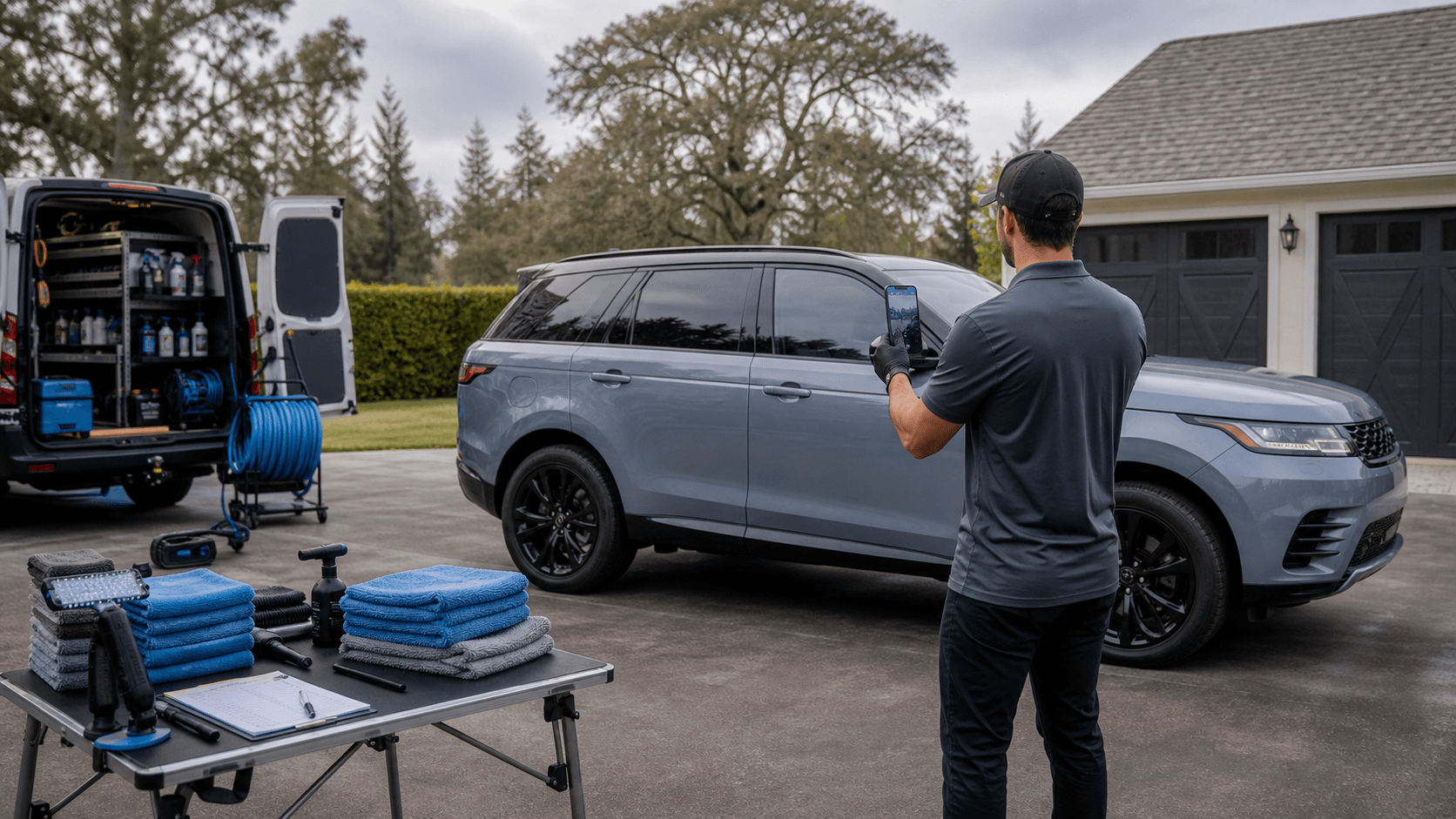
Damage Documentation
How to Document Vehicle Damage Before Detailing Work Begins
A practical pre-service damage documentation workflow for car detailers who want cleaner records, fewer disputes, and more professional customer handoffs.
Most damage disputes do not start because a detailer did careless work. They start because nobody has a clean, trusted record of what the vehicle looked like before the job began.
A few random camera-roll photos help, but they are rarely enough. The useful record is organized, repeatable, timestamped, and easy to share with a customer when everyone still remembers the condition of the vehicle.
Start With The Claim You May Need To Answer
Before you pick up a pressure washer, imagine the message you do not want to receive tomorrow: a customer says the bumper scratch, seat stain, curb rash, or windshield chip was caused during the detail. Your inspection should make that question easy to answer calmly.
The goal is not to build an adversarial file against the customer. The goal is to create shared visibility. When photos are clear and collected before work begins, both sides can look at the same evidence instead of relying on memory.
- Capture the full panel before close-ups so the location is obvious.
- Use consistent angles so before and after photos are easy to compare.
- Document interior wear, wheels, glass, trim, and paint defects, not just obvious exterior scratches.
- Add short notes for anything a customer is likely to ask about later.
Photograph The Whole Vehicle Before The Problem Areas
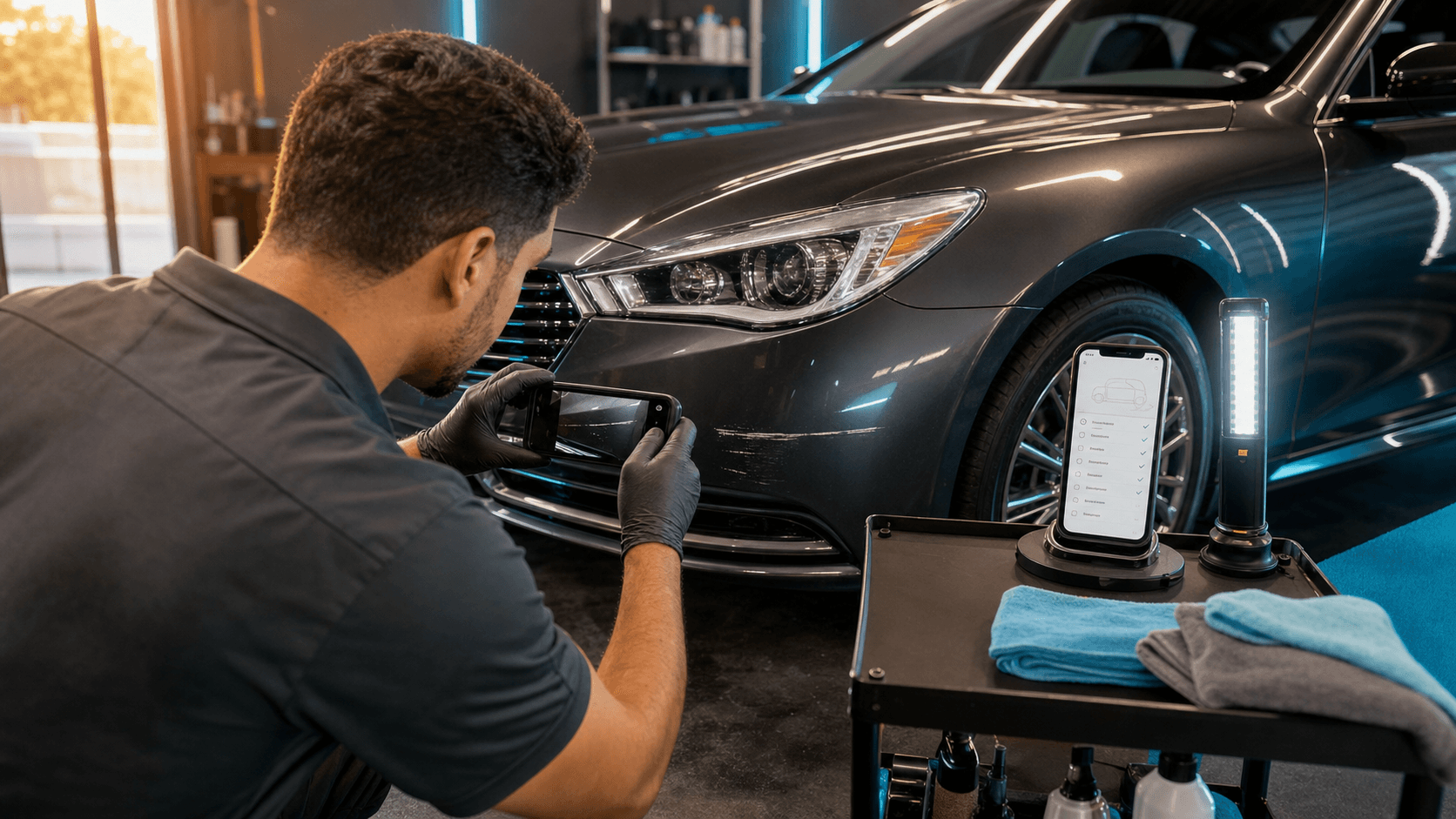
A close-up of a scratch is useful only if someone can tell where it is. Begin with the walk-around: front, rear, driver side, passenger side, hood, roof, glass, bumpers, wheels, and interior. Once the broad record exists, capture the specific defects.
This sequence creates context. A customer can see the full bumper and then the close-up scratch. A shop owner can review the whole job without guessing whether a photo belongs to the front lip, the rear quarter, or a door edge.
Use Light To Show, Not To Dramatize
Inspection lighting matters, especially for swirls, scuffs, oxidation, and fine scratches. Use an inspection light at a shallow angle, but avoid making the photo look theatrical. Your documentation should feel neutral and repeatable.
If the lighting makes every reflection look like damage, step back and take a second photo. The strongest report is the one that feels fair.
Separate AI Assistance From Final Judgment
AI can help surface possible dents, chips, stains, and scratches, but it should not be treated as the final word. The professional detailer should review every finding, dismiss anything caused by glare or shadow, and add plain-language notes where needed.
That distinction protects trust. A report that says “possible scratch visible on front bumper” is more credible than one that overstates certainty.
Get Acknowledgment Before The Keys Change Hands
The best time to collect customer acknowledgment is before work begins. A short signature step confirms that the customer had a chance to review the documented condition. It also signals that your process is professional and consistent.
Keep the wording simple. The signature should acknowledge that the report documents visible condition for recordkeeping. It should not imply insurance coverage, a warranty, or legal advice.